Can I clean up water damage myself?
A small spill on a hard surface may be manageable if the source is known and the area is safe. Water beneath flooring, inside walls, or near electricity needs a different approach. Avoid entering standing water or handling suspected sewage. Tell a local provider what got wet and when. Ask whether hidden moisture needs checking before putting furniture back or letting children use the room.
What should I do first when I find water damage?
Start by keeping people and pets away from the affected space. Avoid wet outlets, appliances, and electrical panels. If you can reach the water shutoff without entering a hazardous area, stop the supply. Take photos from a safe spot. For emergency water damage repair, Request a callback to check provider availability and explain any safety concerns before discussing access to your home.
What are the early signs of hidden water damage?
A musty cupboard, lifting floor edges, or a stain that returns can point to moisture you cannot see. Note where it appears and whether it changes after rain or appliance use. A mark alone cannot tell you the cause. Share your observations with a local provider and ask whether moisture checks could help before moving furniture or opening the wall yourself.
Will household fans dry water under my floor?
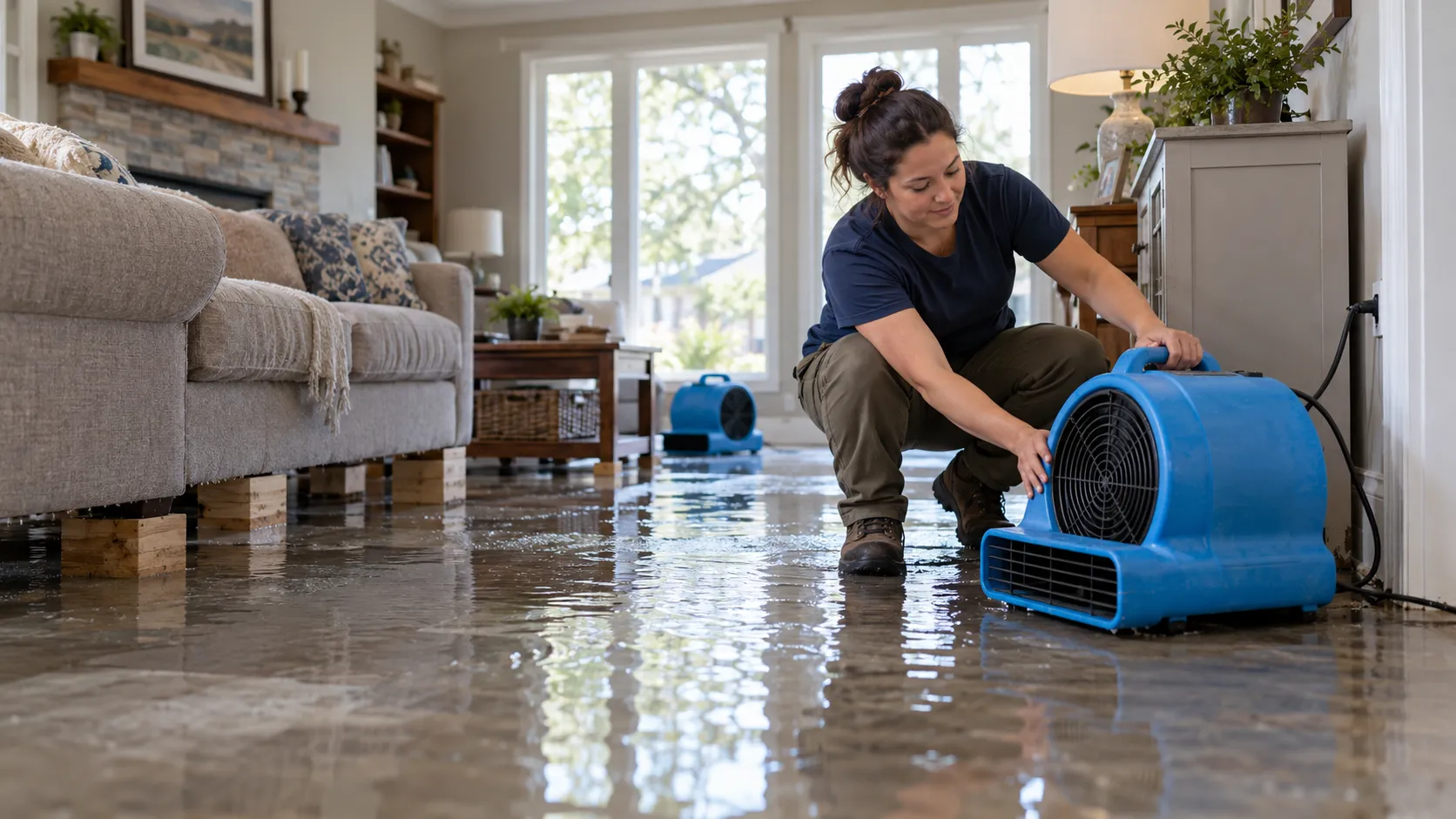
A floor can feel dry while material underneath still holds moisture. Household fans cannot tell you whether that hidden layer has dried. Ask the provider how water extraction and structural drying would be assessed for your flooring. Before running equipment yourself, explain the water source and affected rooms. Keep children and pets away from wet areas, electrical cords, and any equipment the provider places.
How much does water damage restoration cost?
The price depends on how far water spread, what materials were affected, and whether contamination or repairs are involved. Describe the rooms and surfaces, but expect that a useful estimate may require inspection. Ask the provider for a written quote that separates extraction, drying, disposal, and repairs. Check how equipment charges are calculated and what could change the total before approving work.
Does homeowners insurance cover water damage restoration?
Some policies may cover sudden damage; check your policy for exclusions, deductibles, and reporting requirements. Longstanding leaks and flooding may be treated differently. Photograph visible damage when safe and keep receipts for related expenses. Providers can often help document damage for a claim. Ask your insurer what records it needs before discarding belongings, unless keeping them creates a hazard.
How can I help prevent another flooded basement?
Look for patterns first: does water appear after heavy rain, near a pipe, or beside an appliance? Keep accessible drains clear and check visible hoses for wear. Arrange suitable help for gutters, drainage, or pump maintenance. After flooded basement cleanup, ask the provider what source was identified and which follow-up repairs need a separate specialist. Drying alone does not fix the cause.
Can my family stay home during water damage restoration?
That depends on safety, the affected rooms, and the work required. Ask the provider whether bedrooms, bathrooms, and walking routes can remain usable. Discuss equipment noise, pets, school mornings, and access arrangements before work begins. Some spaces may need to stay off limits. Recoveredreplacement Restoration makes referrals; the independent provider assesses conditions and explains whether staying home is suitable as the work progresses.